Health & Safety Policy — House Clearance Farnborough
 This Health and Safety Policy sets out the standards and arrangements that govern safe working practices for our house clearance operations. It applies to all staff, contractors and sub-contractors engaged in house clearance, home clearance and rubbish removal activities. The policy recognises that waste clearance can present a variety of hazards including manual handling risks, sharps, hazardous substances and vehicle-related dangers. Our aim is to prevent harm by ensuring risk assessments, adequate training, appropriate equipment and clear management responsibilities are in place across the service area.
All employees and operatives must familiarise themselves with the policy and adhere to operational procedures for rubbish clearance and waste management. Supervisors are responsible for implementing safe systems of work, and managers will ensure resources are provided for protective measures. This statement is supported by a commitment to comply with health and safety best practice, and to review risk control measures regularly. Training in manual handling, use of lifting aids and safe disposal of household waste is mandatory for operational teams.
 Risk assessments will be completed prior to every clearance job. These assessments identify hazards such as unstable structures, asbestos-containing materials, electrical risks, biological hazards and stored chemicals. Where a hazard is identified the work will either be modified, additional controls introduced or, if necessary, specialist contractors engaged for safe removal. Routine checks and pre-job surveys will form part of the job acceptance process to minimise exposure to risks during rubbish clearance operations.
Roles, Responsibilities and Training
Line managers hold responsibility for ensuring compliance with this policy across house and rubbish clearance services. Staff must report unsafe conditions or incidents immediately. Key responsibilities include: supervising tasks, providing training, supplying PPE and maintaining records. All team members will receive refresher training and induction that covers relevant topics: manual handling techniques, use of powered equipment, safe disposal of sharp objects and identification of hazardous waste streams such as solvents or batteries.
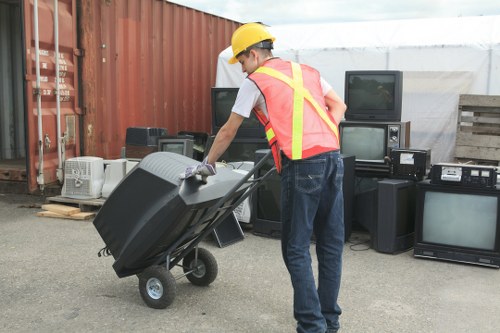
 Personal protective equipment (PPE) is provided according to task risk and must be worn where required. Typical PPE includes gloves, eye protection, high-visibility clothing, steel-toe footwear and respiratory protection for dusty or contaminated environments. The policy emphasises that PPE is the last line of defence; engineering and administrative controls are preferred where reasonably practicable. Supervisors will ensure equipment is inspected and maintained.
Vehicles and mechanical handling equipment used for rubbish removal and waste collection must be maintained and checked daily. Drivers and operators will follow safe loading procedures to avoid overloading and to secure loads for transit. Only competent personnel will operate powered lifting devices. Vehicle routes and parking will be planned to reduce risks to the public and operatives during household clearances.
Operational Controls, Hazardous Materials and Incident Management
 Specific controls are in place for hazardous materials encountered during house clearance work. If asbestos or suspected asbestos-containing materials are found, operations will stop and the item will be isolated until a licensed contractor or specialist advisor assesses and removes it. Household chemicals, batteries, solvents and paint should be segregated and disposed of via appropriate waste streams to prevent environmental harm. Staff are trained to recognise common hazardous materials and to follow the documented escalation process.
Sharps and biohazardous waste pose particular risks. The policy requires that sharps are handled only by trained staff using appropriate sharps containers, and any biological contamination is managed with disinfectants and safe removal techniques. Where the site assessment indicates potential exposure to blood or bodily fluids, a specialist clean will be arranged. All incidents, near misses and injuries will be reported through the company reporting system and investigated to identify corrective actions.
 Monitoring, review and continuous improvement are fundamental to this policy. Regular site audits, toolbox talks and performance reviews will ensure compliance with safe working practices. The policy will be reviewed annually and after significant incidents or changes to operations. Records of training, risk assessments, maintenance and incident reports will be retained to demonstrate oversight and to support ongoing improvements in our rubbish clearance and house clearance services.
- Prevent: Identify hazards and eliminate or reduce risks before work starts.
- Protect: Provide appropriate PPE, equipment and supervision.
- Prepare: Ensure staff are trained and emergency procedures are in place.
- Promote: Encourage reporting of incidents and suggestions for safer working.
This policy applies to all house clearance and waste clearance activities across our service area and complements statutory duties and recognised industry standards. By following these measures we commit to delivering safe, responsible and professional rubbish removal and clearance services while protecting our staff, customers and the public.
